
The artificial intelligence wave that reshaped copywriting, graphic design, and software development is now disrupting the most resource-heavy medium of all: video production. We are moving rapidly past the days where high-quality motion graphics required bloated budgets, massive crews, and endless hours of timeline editing.
Leading this charge is Gemini Omni, a multimodal AI powerhouse designed to effortlessly translate creative vision into cinematic reality. For digital creators, entrepreneurs, and marketers, the question isn’t just about understanding what Gemini Omni does, but how to leverage it to supercharge daily workflows. Whether you need an eye-catching social media hook or a polished product teaser, Gemini Omni transforms video generation from a manual chore into visionary creative direction.
Table Of Contents
- 1 Demystifying Gemini Omni: More Than Just Text-to-Video
- 2 The Need for Speed: Why Creators Are Pivoting to AI
- 3 Real-World Applications: Where Multimodal AI Shines
- 4 Integrating AI Into Your Daily Workflow
- 5 The Horizon of Multimodal AI (And Its Current Limits)
- 6 Final Thoughts: The New Standard for Digital Storytelling
Demystifying Gemini Omni: More Than Just Text-to-Video
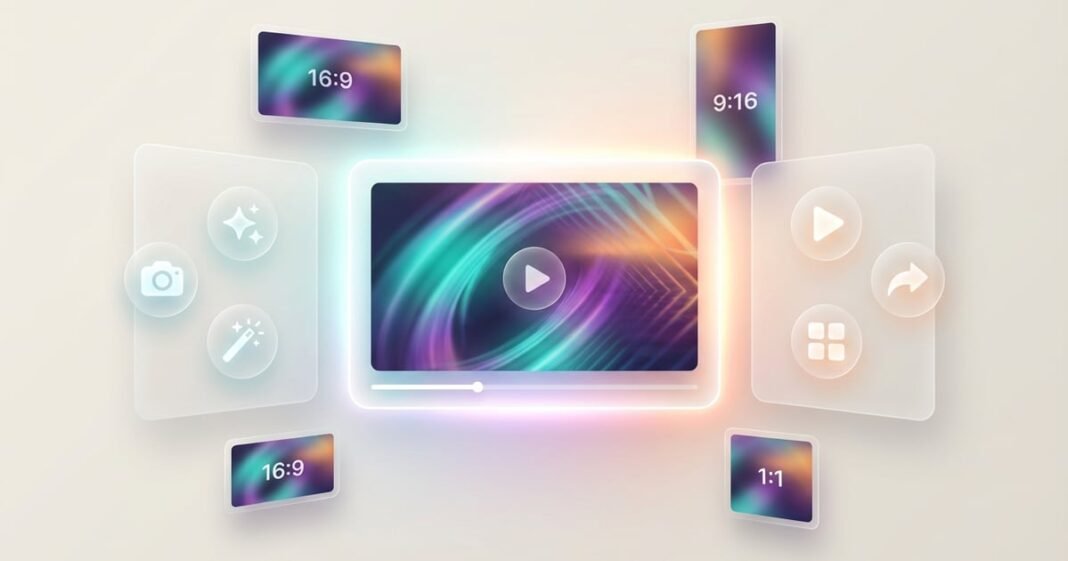
Fundamentally, Gemini Omni operates as a sophisticated, multimodal video generation engine. “Multimodal” is the magic word here—it means you aren’t restricted to typing a basic text prompt and crossing your fingers. Instead, you can feed the AI text, reference images, or even base video clips to dictate the final output.
Because compelling video requires precise lighting, camera angles, pacing, and composition, this multi-input approach gives you unprecedented control. You can describe a specific mood, upload a character reference image, and define the exact camera pan simultaneously. It marks a massive leap from the chaotic, unpredictable early days of AI video, putting the director’s chair firmly back in your hands.
The Need for Speed: Why Creators Are Pivoting to AI
If Gemini Omni has a defining superpower, it is velocity.
Traditional video creation is notoriously sluggish. Pre-production, filming, and post-production can eat up weeks just to produce a 30-second promo. Gemini Omni condenses this entire timeline into a rapid-fire iteration loop. You can brainstorm a visual, generate it, tweak the camera pan, fix the lighting, and export a final cut in mere minutes.
This completely flips the economics of media production:
- Growth Marketers can instantly generate and A/B test dozens of visual variations for campaigns.
- Content Creators can conjure up custom, high-quality B-roll to match their scripts on the fly.
- Visual Designers can easily transition static mockups into dynamic, moving assets.
- Bootstrapped Founders can produce premium-looking launch trailers without hiring an external agency.
In today’s video-first digital economy, motion converts. For lean teams without enterprise budgets, exploring dedicated environments like Gemini Omni closes the production gap, democratizing high-end visual storytelling and allowing anyone to scale their content effortlessly.
Real-World Applications: Where Multimodal AI Shines
- Viral Social Media Content: Short-form algorithms feed on high-retention, visually striking hooks. Creators leverage AI to abandon generic stock footage in favor of highly customized, trend-forward clips that grab attention instantly.
- SaaS and Product Marketing: Startups need engaging feature explainers and hero videos. This technology allows marketing teams to prototype heavily and finalize creative concepts before spending a dime on traditional production.
- Immersive Education: Teachers and course creators can visualize the invisible—be it a deep-space phenomenon or a microscopic cellular process. Video closes the learning gap significantly faster than a wall of text.
- Agile Storyboarding: Directors and creative agencies use AI to mock up animatics and pre-visualize scenes, making it infinitely easier to pitch a mood or framing style to clients with concrete visuals.
Integrating AI Into Your Daily Workflow
A professional approach to AI video doesn’t start with a prompt; it starts with a clear objective. Are you trying to evoke emotion, explain a feature, or drive a click? Once your intent is locked, you move to prompt architecture.
A highly effective prompt leaves nothing to guesswork. Instead of typing “a busy city,” a pro dictates the scene: “A sprawling cyberpunk metropolis at dusk, cinematic drone shot gliding past neon-lit skyscrapers, glowing fog, highly detailed, moody atmosphere.”
By combining these robust text prompts with visual reference images, you lock in brand colors and character consistency. Once the raw footage is generated, the workflow shifts to curation. You refine, regenerate, and tweak. To experience this streamlined process yourself, modern AI video interfaces provide an optimized, browser-based environment to start directing your own generations immediately.
The Horizon of Multimodal AI (And Its Current Limits)
The current era hints at a unified creative ecosystem in which an overarching idea can be translated simultaneously into text, images, and motion without switching between disconnected software. However, human curation remains irreplaceable. The AI is the execution engine, but you are the driver providing taste, judgment, and emotional resonance.
That said, it is vital to stay grounded. Current video models still struggle to render legible text, maintain absolute character consistency over long clips, and simulate perfect physics. Iteration is simply part of the process. Furthermore, commercial use demands ethical oversight—ensure your AI-generated content adheres to platform rules and doesn’t mislead your audience. Strategic integrity remains your responsibility.
Final Thoughts: The New Standard for Digital Storytelling
This technology is doing more than animating pixels; it is fundamentally shortening the distance between a creator’s imagination and the final render. By providing precise, multimodal control over every aspect of a scene, it serves as a foundational layer for the modern creative stack.
Whether you are an educator seeking clarity, a marketer optimizing ad spend, or a founder chasing cinematic quality on a startup budget, mastering these advanced generation tools is no longer just a neat trick. It is rapidly becoming the industry standard for how the world plans, produces, and publishes digital media.