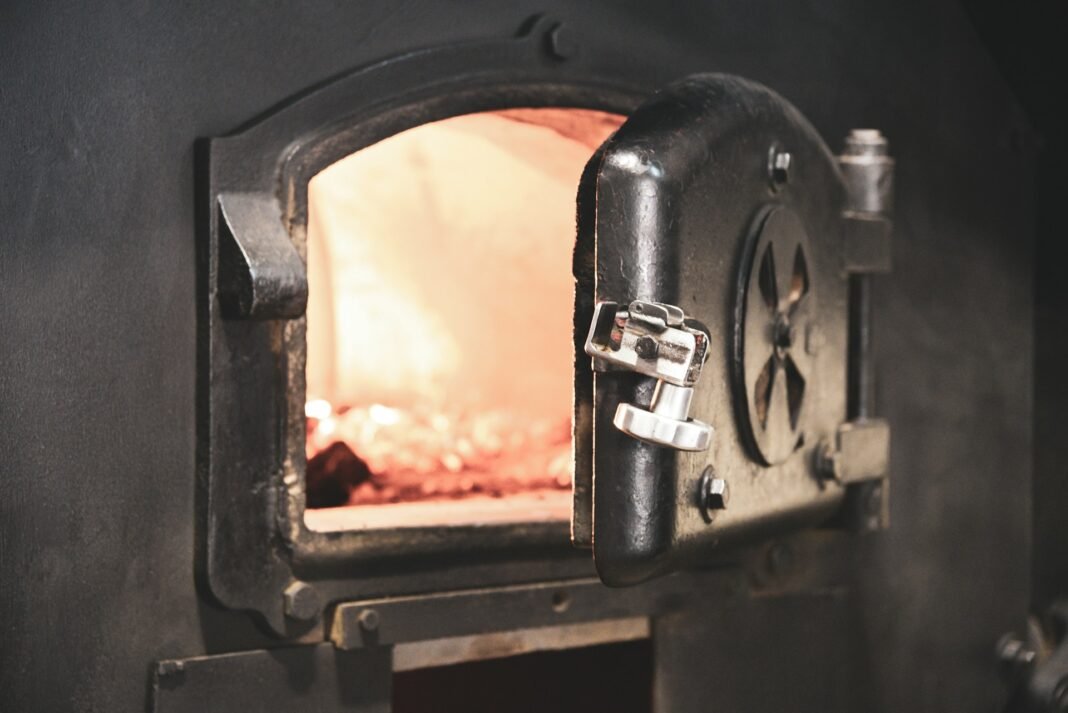

Heat behaves differently inside a curing oven than many people expect. Coated metal parts absorb energy from moving air, radiant surfaces, and surrounding structures all at the same time. Engineers who design powder coating ovens rely on heat transfer modeling to understand how these forces interact so that powder coating cures evenly across every surface.
Table Of Contents
- 1 Convection Airflow Mapping Inside Cure Chambers
- 2 Radiant Heat Distribution Across Part Surfaces
- 3 Thermal Mass Impact on Ramp-up Time
- 4 Burner Placement for Uniform Temperature Zones
- 5 CFD Analysis for Air Velocity Balance
- 6 Insulation Thickness and Heat Loss Calculation
- 7 Temperature Uniformity Testing at Load Points
- 8 Recovery Time Modeling After Door Openings
- 9 Energy Consumption Forecasting Under Full Production
Convection Airflow Mapping Inside Cure Chambers
Air circulation forms the backbone of heat movement in powder curing ovens. Heated air travels through the chamber, carrying energy to parts as they pass through the cure cycle. Engineers study airflow paths to determine how air flows around racks, through narrow gaps between components, and across deep cavities where coatings can struggle to reach proper temperature. Air velocity mapping often reveals that even well-built powder coating equipment can develop pockets where airflow slows down. Those stagnant zones reduce heat transfer and may leave sections of a part under-cured. By adjusting fan placement, duct design, and recirculation patterns, engineers improve airflow inside industrial powder coating ovens and maintain more stable curing conditions throughout production.
Radiant Heat Distribution Across Part Surfaces
Radiant heat plays a quiet but powerful role in curing powder coating. Surfaces inside the oven emit infrared energy as they heat up, and that energy transfers directly to coated metal parts. Even though airflow drives most heating, radiant energy fills in the gaps where air movement alone cannot reach every surface.
Different part shapes respond to radiant heat in unique ways. Flat panels absorb energy evenly, while deep recesses or heavy brackets may shield certain areas from direct radiation. Designers account for this behavior when building powder coating systems, ensuring that oven wall temperatures and part spacing allow radiant heat to support the curing process across the entire load.
Thermal Mass Impact on Ramp-up Time
Metal parts and conveyor fixtures act as heat sponges inside powder coating ovens. Thick steel frames or large fabricated parts require significant energy before their surfaces reach curing temperature. This stored energy is known as thermal mass, and it directly affects how quickly an oven can move from startup to full production conditions. Larger loads demand longer ramp-up times because the oven must heat both the air and the metal structure supporting the parts. Engineers evaluate thermal mass carefully when designing powder coating equipment packages so the heating system can maintain proper curing temperatures without long delays. Balanced thermal capacity allows powder coating systems to process both lightweight components and heavy assemblies without sacrificing cycle time.
Burner Placement for Uniform Temperature Zones
Temperature balance across the oven chamber depends heavily on burner placement. Heat sources located too close together can create hot spots, while distant corners of the chamber may struggle to reach the curing temperature. Careful burner positioning spreads thermal energy more evenly through the airflow system. Strategic layouts help powder curing ovens maintain consistent temperatures from entry to exit. Engineers evaluate airflow direction, chamber dimensions, and part density before choosing burner locations. A well-designed industrial powder coating oven distributes heat smoothly, preventing uneven coating flow or gloss variations during curing.
CFD Analysis for Air Velocity Balance
Computational fluid dynamics, often shortened to CFD, allows engineers to simulate airflow and heat movement inside powder coating equipment before the system is built. Digital models recreate the internal environment of powder coating ovens, predicting how heated air moves through ducts, fans, and cure chambers.
Simulation results highlight airflow patterns that may cause uneven heating. Excessively fast air movement can cool surfaces too quickly, while slow areas reduce heat transfer. CFD modeling helps designers refine powder coating systems by adjusting baffles, duct paths, and recirculation fans until air velocity becomes evenly balanced.
Insulation Thickness and Heat Loss Calculation
Heat escaping through oven walls represents wasted energy. Proper insulation thickness prevents that loss and keeps internal temperatures stable during curing cycles. Engineers calculate heat loss using insulation conductivity values, wall surface area, and expected temperature differences between the chamber and the surrounding workspace.
Well-insulated powder coating equipment maintains heat more efficiently, reducing fuel consumption and lowering operating costs. Facilities comparing a powder coating oven for sale often overlook insulation design, yet it plays a major role in long-term performance and energy efficiency across powder coating operations.
Temperature Uniformity Testing at Load Points
Temperature uniformity testing measures how evenly heat spreads across different positions inside the oven. Sensors placed along the conveyor path record temperature readings at multiple load points where parts travel during production. These measurements show whether the curing chamber maintains stable conditions from the entry zone to the exit.
Testing frequently reveals subtle temperature differences caused by airflow shifts or part density changes. Engineers analyze this data to adjust fan speeds, duct alignment, or burner output. Consistent temperature profiles help powder coating equipment produce reliable finishes regardless of where parts sit inside the curing chamber.
Recovery Time Modeling After Door Openings
Opening the oven door introduces cooler air into the chamber and temporarily disrupts the curing environment. Recovery time modeling measures how quickly powder coating ovens return to the target temperature after this disturbance. Fast recovery prevents incomplete curing during busy production cycles.
Operational testing often shows that airflow design influences recovery speed more than burner size alone. Improved recirculation helps heated air spread quickly after the door closes. Efficient powder coating systems maintain curing conditions even when loading activity interrupts the chamber environment.
Energy Consumption Forecasting Under Full Production
Running an industrial powder coating oven requires steady energy input throughout the workday. Engineers forecast fuel consumption by evaluating burner capacity, airflow demand, insulation performance, and conveyor speed. These calculations estimate how much energy the oven will consume during continuous operation.
Energy modeling also helps buyers evaluate powder coating equipment for sale before committing to a system. A properly designed powder coating equipment package balances curing performance with efficient energy use. Facilities benefit from accurate projections because they reveal operating costs long before installation begins.
Complete powder coating systems often include custom powder curing ovens designed for consistent temperature control and energy efficiency across demanding production environments. Reliant Finishing Systems provides design guidance and equipment solutions that support reliable curing performance in modern powder coating operations.