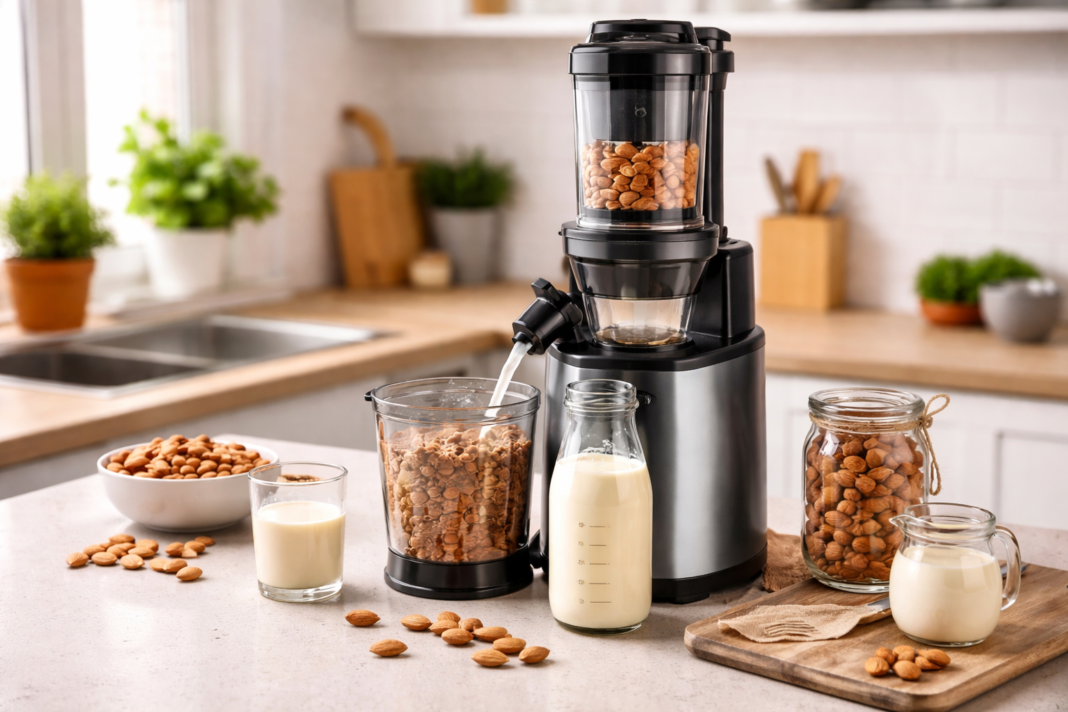

Ever found yourself staring at the supermarket shelf, wondering why a tiny carton of almond milk costs nearly as much as a decent bottle of wine? Have you considered what’s actually in that store-bought version, with its long list of additives and stabilisers? What if you could make fresh, creamy almond milk right in your own kitchen, knowing exactly what goes into every glass?
Making almond milk at home has become increasingly popular across Australian kitchens, and for good reason. It’s fresher, tastier, and gives you complete control over the ingredients. Plus, there’s something genuinely satisfying about creating your own plant-based milk from scratch. Whether you’re lactose intolerant, following a vegan lifestyle, or simply looking to reduce your environmental footprint, homemade almond milk ticks all the boxes.
In this guide, we’ll explore everything you need to know about choosing the perfect almond milk juicer for your kitchen. From understanding the different types of machines available to comparing costs and features, you’ll walk away with the knowledge to make a confident purchase. We’ll also share a step-by-step guide to making your own almond milk and highlight common mistakes to avoid. Let’s get stuck into it!
Table Of Contents
- 0.1 What is an Almond Milk Juicer and How Does It Work?
- 0.2 Types of Almond Milk Makers: Which One Suits Your Kitchen?
- 0.3 Key Features to Look for in the Best Almond Milk Juicer
- 0.4 Is It Cheaper to Make Your Own Almond Milk?
- 0.5 What is the Best Machine to Make Almond Milk at Home?
- 0.6 How to Make Almond Milk with a Juicer: Step-by-Step Guide
- 0.7 Common Mistakes to Avoid When Choosing an Almond Milk Juicer
- 0.8 Frequently Asked Questions
- 1 Finding Your Perfect Almond Milk Juicer
What is an Almond Milk Juicer and How Does It Work?
An almond milk juicer is essentially a machine designed to extract the liquid goodness from almonds, leaving you with smooth, creamy plant-based milk. These machines work by grinding soaked almonds with water and then separating the pulp from the liquid. The result? Fresh almond milk ready for your morning coffee or cereal.
The Difference Between a Juicer and a Nut Milk Maker
Here’s where things get interesting. A traditional juicer is designed primarily for fruits and vegetables, extracting juice through pressing or centrifugal force. A dedicated nut milk maker, on the other hand, is specifically built for creating plant-based milks. It typically heats, blends, and strains all in one unit.
Nut milk makers often include preset programmes for different types of milk, making the process almost foolproof. Traditional juicers require more manual effort and separate straining.
Can You Make Almond Milk with a Regular Juicer?
Absolutely! Many people successfully use masticating juicers to make almond milk. However, you’ll likely need to pre-soak your almonds and may require a nut milk bag for straining. It’s doable, but dedicated machines simplify the process significantly.
Types of Almond Milk Makers: Which One Suits Your Kitchen?
Choosing the right machine depends on your budget, kitchen space, and how often you plan to make almond milk. Let’s break down your options.
Dedicated Nut Milk Machines
These all-in-one units are purpose-built for making plant-based milks. Simply add your soaked almonds and water, press a button, and wait. Most models heat, blend, and strain automatically. They’re ideal if you’re serious about making nut milk regularly.
High-Speed Blenders with Straining Systems
A powerful blender paired with a nut milk bag is a versatile option. You can use it for smoothies, soups, and nut milks. This approach requires more hands-on effort but offers flexibility for other kitchen tasks.
Slow Juicers and Masticating Juicers for Nut Milk
Masticating juicers use a slow grinding action that preserves nutrients and produces less heat. They’re excellent for almond milk, though the process takes longer. Many come with specific attachments for nut milks.
Manual and Budget-Friendly Options
On a tight budget? A standard blender and cheesecloth can work wonders. It’s more labour-intensive, but perfectly effective for occasional batches.
Key Features to Look for in the Best Almond Milk Juicer
Not all machines are created equal. Here’s what to consider before purchasing.
Motor Power and Performance
A powerful motor ensures smooth blending without chunky bits. Look for at least 1000 watts for consistent results. Weaker motors may struggle with hard almonds.
Capacity: How Much Almond Milk Do You Need?
Consider your household’s consumption. Most machines produce between 500ml and 1.5 litres per batch. Larger families might prefer higher-capacity models.
Ease of Cleaning and Maintenance
Nobody wants to spend ages scrubbing. Look for machines with dishwasher-safe parts and simple designs. Removable components make cleaning much easier.
Noise Levels for Apartment Living
Living in a flat? Noise matters. Masticating juicers tend to be quieter than high-speed blenders. Check product reviews for real-world noise levels.
Durability and Warranty Considerations
Invest in quality. Look for machines with solid warranties—at least two years is ideal. Stainless steel components typically last longer than plastic.
Is It Cheaper to Make Your Own Almond Milk?
Let’s talk money. Is homemade actually more economical?
Cost Comparison: Homemade vs Store-Bought in Australia
A litre of store-bought almond milk costs around $3-5 in Australian supermarkets. Making your own using raw almonds works out to roughly $2-3 per litre, depending on almond prices. The savings add up over time, especially for frequent drinkers.
Getting the Most Value from Your Almonds
Don’t throw away the leftover pulp! Use it in baking, smoothies, or homemade granola. This stretches your investment even further and reduces waste.
What is the Best Machine to Make Almond Milk at Home?
Top-Rated Nut Milk Makers for Australian Kitchens
Popular options include the Almond Cow, NutraMilk, and various Vitamix blenders. These consistently receive excellent reviews for performance and reliability. Check Australian retailers for availability and local warranty support.
Best Budget Almond Milk Juicer Options
For those watching their spending, consider a quality masticating juicer or a combination of a mid-range blender with nut milk bags. Brands like Kuvings and Hurom offer reliable options under $400.
How to Make Almond Milk with a Juicer: Step-by-Step Guide
Ready to make your first batch? Here’s how:
- Soak one cup of raw almonds overnight (8-12 hours)
- Drain and rinse thoroughly
- Add almonds and three cups of filtered water to your machine
- Process according to your machine’s instructions
- Strain through a nut milk bag if needed
- Store in a sealed container in the fridge
Pro tip: Add a pinch of salt and a date or two for natural sweetness.
Common Mistakes to Avoid When Choosing an Almond Milk Juicer
Don’t fall into these traps:
- Buying too small: Underestimating your capacity needs leads to frustration
- Ignoring cleaning requirements: Complex machines gather dust if they’re annoying to clean
- Choosing based solely on price: Cheap machines often disappoint
- Forgetting noise levels: Test before buying if possible
Frequently Asked Questions
Do You Need a Special Machine to Make Almond Milk?
Not necessarily. While dedicated machines simplify the process, a good blender and straining bag work perfectly well. It depends on your budget and convenience preferences.
Can I Use a Cold Press Juicer for Almond Milk?
Yes! Cold press (masticating) juicers are excellent for almond milk. They operate slowly, preserving nutrients and producing minimal heat. Many models include specific nut milk attachments.
How Long Does Homemade Almond Milk Last?
Fresh almond milk lasts 3-5 days refrigerated in a sealed container. Always give it a shake before using, as natural separation occurs. If it smells off, it’s time to make a fresh batch.
Finding Your Perfect Almond Milk Juicer
Choosing the right almond milk juicer ultimately comes down to your specific needs, budget, and kitchen habits. Whether you opt for a dedicated nut milk maker, a versatile high-speed blender, or a budget-friendly manual setup, making almond milk at home is genuinely rewarding. The freshness and flavour simply can’t be matched by store-bought versions.
Consider how often you’ll use the machine, how much space you have, and what other functions might be useful. Don’t forget practical factors like noise levels and cleaning requirements—these make the difference between a machine you love and one that collects dust.
Take your time researching, read Australian reviews, and invest in quality where your budget allows. Your morning coffee will thank you, and so will your wallet over time. Happy almond milk making!